

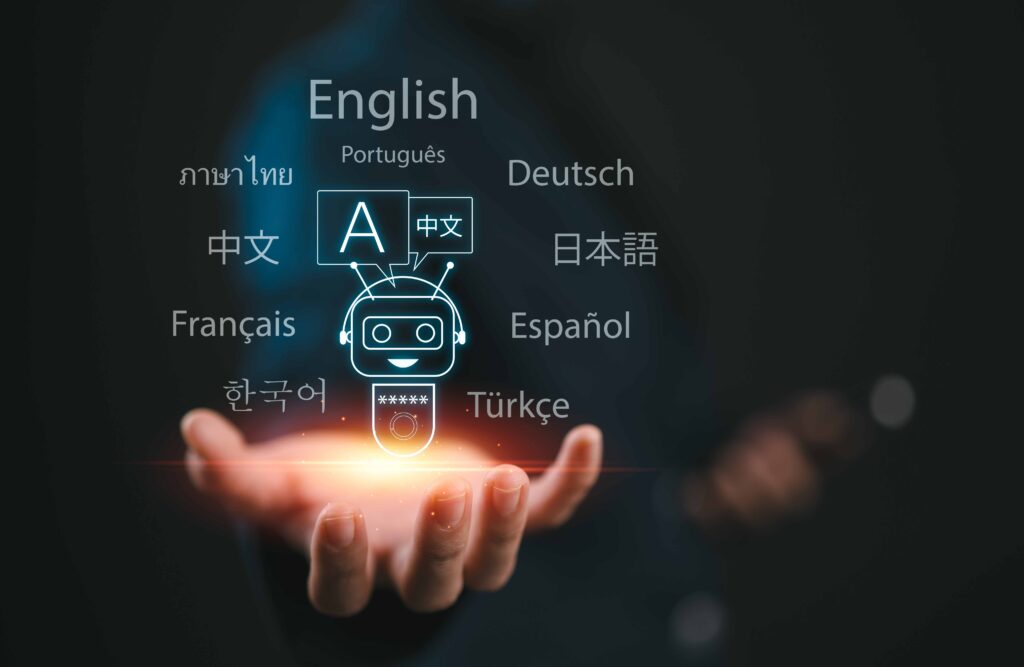
Conversational AI is a mainstream technology. Billions of AI conversations are taking place daily, and this number will only grow. Large and small organisations, across all industries, are using chatbots, voicebots and virtual assistants to engage with customers and employees alike.
Used for customer service, employee support, contact centre agent support, as well as sales and marketing activities, conversational AI solutions are playing an important role in enhancing reputation, growing revenue and building loyalty.
Multilingual and multicultural conversational AI
Conversational AI done right is much more than just an exchange of words and sentences. To be of value, conversational AI interactions need to be trusted, relevant and meaningful. This requires an understanding of cultural norms and rules, preferred communication styles, context, emotion and intent.
Conversational AI requires both multilingual and multicultural capability, as core features, to meet the expectations of users, drive customer satisfaction and increase brand reputation.
Multilingual capability is considered a standard feature for the majority of chatbots today, and involves AI translating or generating text in different languages. Multicultural capability ensures a chatbot is communicating appropriately, safely and aligned to the social and ethical norms and rules aligned to those of the user. It can mitigate bias, exclusion and offence, and deliver real human-centred experiences.
Conversational AI solutions that integrate multilingual capability with multicultural capability can deliver improved engagement, loyalty and growth.
Culturally aware AI
Creating conversational AI solutions that can understand and adapt to cultural diversity is critical to delivering great customer experiences. Whilst it is relatively easy to build a chatbot that is safe and polite, true multicultural conversational AI adapts, is context aware and culturally intelligent across societies and communities.
Cultural Intelligence
Conversational AI solutions should be, at the least, culturally aware, but ideally culturally adaptive.
Culturally aware AI enables the communication style of interactions to adapt for cultural appropriateness, seeks clarification when context is unclear, avoids defaulting to western norms, and is able to handle indirectness and sensitive topics well.
Culturally adaptive AI is dynamic and can instantly adapt tone, structure and provide the appropriate examples for cultural relevancy. It avoids stereotyping, and advice is culturally grounded. With culturally adaptive AI cultural consistency is maintained throughout long and multi-turn conversations, and even subtle cultural bias can be detected and mitigated. With culturally adaptive AI in play, local appropriateness is ever present and high user trust is built.
Beyond language in culturally aware AI
Multilingual capability must be accompanied by the correct meaning that will be inferred during conversations. Culturally specific humour, irony, and politeness must be considered, as well as the legal and social constraints of communities.
Adapting the tone of interactions based on cultural context, for example, preferences of warmth, formality, enthusiasm or neutrality. Similarly, conversational AI that is culturally aware involves ensuring familiarity with customs, traditions and social norms, and cultural taboos as well as avoiding stereotypes and gender, racial and regional biases.
Culturally aware experiences
Great customer experiences require deep cultural understanding. From mastering language, demonstrating cultural intelligence and ensuring the conversational AI solution is designed to be ethical and adaptable.
Culturally intelligent conversational AI is no longer a nice to have, it is a strategic advantage. Conversational AI providers must ensure that the models they leverage have incorporated culturally diverse datasets, and conversational AI platforms must allow for regional and local configuration when it comes to formality, directness and emotional expression. Equally tone must be fully adaptable, and tone validation must be done with local stakeholders.
Chatbot, voicebot and virtual assistants need more than just multilingual capability; they must be culturally aware to ensure trust, adoption and to deliver real business value of brand credibility and revenue generation.